Ore is a mineral aggregate from which useful elements can be extracted and performance can be exploited. It can be divided into metal mineral and non-metal mineral. Among them, iron ore and coal mines have always been strategically important resources in global mineral resources and it is the lifeblood of the national steel industry. With the development of economic globalization and the establishment and improvement of WTO, the trend of the globalization of mineral resources allocation has become extremely obvious, and the international competition for mineral resources has become increasingly fierce. How to get the high-quality ore is gradually becoming the most crucial issue, especially for those countries who have highly dependent on ore importing.
Whether the ore is imported or mined, we need to test their quality to avoid some unnecessary losses. Ore sampling is a vital stage before the test. The bias from this stage will directly affect the test result. So how to get the most representative ore sample and how to choose the sampling method according to the different objects are of great importance. In the article How Is Your Iron Ore Sampling System? , we introduce the iron ore and some sampling machines. In this article, we will have a more detailed and comprehensive discussion of the ore sampling.
Ore Sampling methods
Ore sampling can be broadly divided into two categories: the sampling of static materials and the sampling of mobile materials. According to the different sampling objects, the sampling methods are different. In the past, manual sampling is used for static materials, and mechanical sampling is often used for mobile materials. While, with the development of technology, mechanical sampling is also widely used in static materials.
Sampling of Static Materials
The static material pile is divided into block material pile and fine grinding material pile.
Block material pile generally refers to the ore heap or waste dump, which is gradually formed in the production process. The properties of materials change in the direction of the length, width and depth of the material pile. Large lumpiness makes sampling difficult, so we usually adopt manual digging or drilling well method.
Digging Method
Digging method is to sample from digging a pit at a certain point on the surface of the material pile. The density of the sampling pit should be taken into account when sampling, as well as the sampling amount at each point and the uniformity of material composition distribution along the direction of material heap thickness. All of them have an impact on the sample’s representativeness. If the material pile is gradually accumulated along the length direction, as long as sampling points are properly arranged, representative samples can be obtained more easily. If the material pile is piled up along the thickness direction, and the material composition varies greatly along the thickness direction, it is difficult to obtain representative samples by the digging method. At this time, the drilling well method should be considered.
Drilling Well Method
Drilling well method is to excavate a shallow well at a certain place of the material pile to obtain the sample. After that, we should take a portion of the sample to do sample division. For this reason that the material is loose, the well wall should be supported when sampling, so the workload is large and the cost is high.
Fine grinding material pile sampling is done by drilling holes. It can be drilled by mechanical drilling, hand drilling or hand drilling with ordinary steel pipes.
 XDCY-MZ
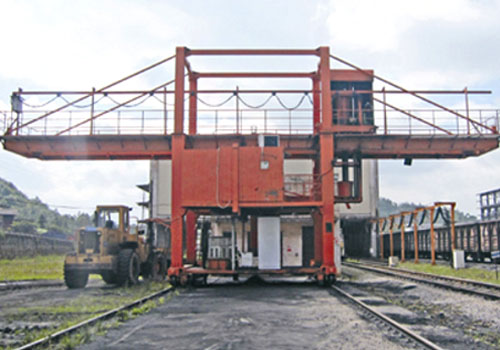
Compared to these manual methods, the mechanical sampling of static materials can be used more widely. Auger Sampling System is the typical equipment which can sample static materials not only from ore heap but also from truck and railcar. It avoids the influence of manual error on sample representativeness and improves the working efficiency. XDCY-MZ TYPE auger sampling system and XDCY-QZ TYPE auger sampling system produced by Top Sampler are a good choice for you. They can be customized according to your requirements.
Sampling of Mobile Materials
Mobile materials refer to the materials in the transport process, such as belt conveyors material transporting, etc. Generally speaking, the sampling of flowing materials is all by horizontal interception. At regular intervals, a small amount of material is taken as a sample perpendicular to the direction of material flow, and then each small sample is accumulated as the gross sample.
 XDPQ-T
Cross Belt Sampling System is commonly used in the ore factory. The ultimate cross belt sampling system contains cross belt conveyor, sample divider, the primary feeder, and sample crusher. It is used to collect ore samples from the moving belt and it can be divided into head cross belt sampling system and central cross belt sampling system. XDPQ-T type and XDPQ-Z type from Top Sampler are the hot sellers. All the procedure of the two cross belt sampling system is controlled by the PLC automatic control system and the system is easy to operate. The cross belt sampling system collects samples based on full cross-section so that the samples reliability is much higher.
As a Chinese sampling system manufacturer, TOP SAMPLER will be your trustworthy business partner. We support high-quality equipment and feasible projects for each client according to your requirements. Hope this article will give you some useful information. Welcome to contact us!